
Commercial septic waste needs to be collected safely, transported by a licensed commercial hauler and discharged at an approved wastewater receiving facility. For Edmonton businesses and industrial sites, good septic waste management also means scheduling service before tanks reach capacity and making sure the material being removed is suitable for the wastewater system.
On a busy job site, septic usually isn’t the thing anyone wants to be thinking about.
Until a holding tank is getting full.
Then it can become a problem very quickly. Crews still need working wash facilities, operations need to keep moving, and the last thing a site supervisor wants is an overflow or an emergency septic call in the middle of a shift.
That’s why commercial septic waste removal in Edmonton is better treated as part of regular site maintenance than something you deal with only when the tank is almost full.
At Rebel Heart, we provide septic waste removal for commercial and industrial sites throughout the Edmonton area. Planning service ahead gives customers a chance to work pumping into their regular site schedule instead of adding another urgent call to an already busy day.
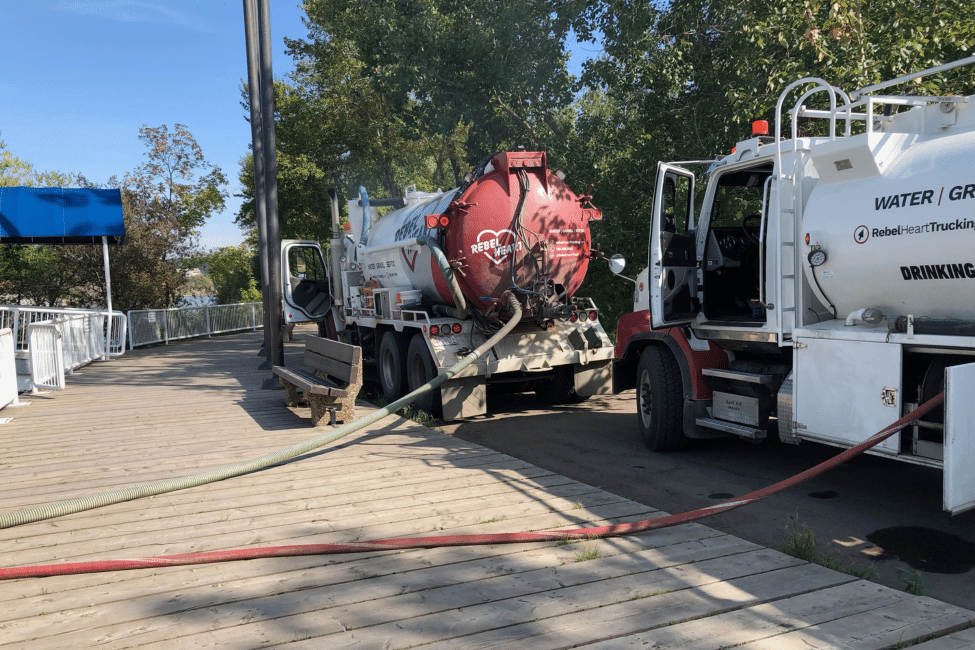
What Is Considered Commercial Septic Waste?
Commercial septic waste is wastewater collected from septic tanks, holding tanks and similar wastewater systems at commercial or industrial properties.
This can include wastewater from shops, industrial yards, temporary facilities and work sites that aren’t connected directly to a municipal sewer system.
One important distinction is what’s actually inside the tank.
Septic and holding-tank waste shouldn’t automatically be treated the same way as other industrial liquid waste. Edmonton’s wastewater transfer stations restrict hazardous waste, flammables, heavy metals and other harmful materials. Commercial haulers also need to provide a manifest for each load showing details such as where the wastewater came from, what it contains and how much is being discharged.
If Rebel Heart is servicing the tank, let our team know before the truck arrives if there’s any possibility that chemicals, oils, solvents or other materials have entered it. Knowing what is being pumped helps determine whether standard septic waste removal is appropriate and how the material needs to be handled.
Why Does Safe Septic Waste Disposal Matter?
There’s more to septic removal than putting a hose into a tank and pumping it empty.
The waste has to go somewhere afterward.
In Edmonton, wastewater transfer stations are used to receive hauled wastewater from holding tanks at homes, businesses and temporary commercial operations that aren’t connected to a sanitary sewer. These stations are available to licensed commercial haulers registered to use them.
Proper disposal helps prevent prohibited materials from entering the wastewater system and gives commercial operators a clearer record of how waste from their site was handled.
For industrial and commercial customers with their own environmental, safety or site requirements, that matters.
How Does Rebel Heart Handle Commercial Septic Removal?
The exact process varies by site, but a typical Rebel Heart commercial septic service follows a straightforward process.
- We confirm the site, tank and access.
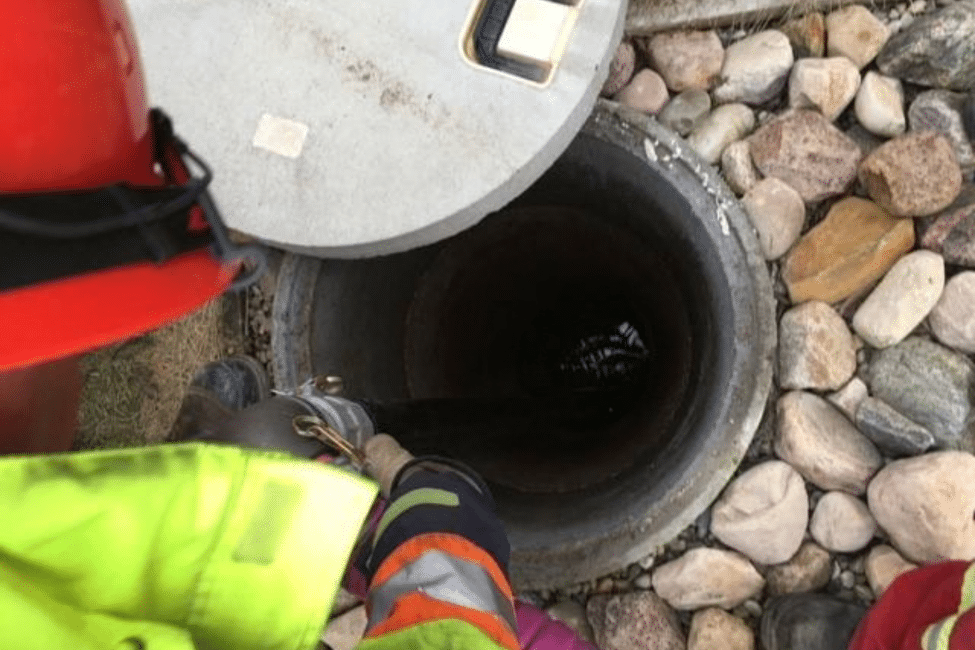
Before pumping, our operator needs to know what is being removed, where the tank is located and whether the vacuum truck can safely reach it. - The tank is pumped.
A Rebel Heart vacuum truck removes the wastewater and accumulated material from the septic tank or holding system. - The waste is hauled for proper disposal.
The collected wastewater is transported to an appropriate approved receiving location based on the type of material being hauled. - We check the system before leaving.
Following a septic removal, Rebel Heart drivers can conduct a quick pump-function test to help confirm that the system is working as expected.
The pumping itself may be straightforward. On active sites, access and timing are often what need more planning.
When Should a Commercial Septic Tank Be Pumped?
A commercial septic or holding tank should be pumped before it reaches capacity. How often that needs to happen depends on tank size, site usage, and how quickly wastewater accumulates.
A small commercial property with light use may have a very different schedule than a busy industrial site or project with a large crew.
Things worth watching include:
- Tank capacity
- Number of people using the system
- How quickly the tank normally fills
- Seasonal or project-related changes in activity
- Previous pumping frequency
- Tank alarms or monitoring systems
If you regularly find yourself calling when the tank is nearly full, it may be time to change the schedule.
Rebel Heart offers custom scheduling for site services, which can help commercial customers plan service around actual site requirements rather than waiting for a problem. If crew size, site activity, or wastewater use changes, the service schedule can be reviewed too.
How Can You Prepare the Site Before a Rebel Heart Truck Arrives?
One of the easiest ways to prepare for septic service is to make sure our operator can safely reach the tank.
That becomes especially important during an Edmonton winter.
Snow and ice can change site conditions quickly. Parked equipment, materials or snow buildup around the service area can also make access harder for a large vacuum truck.
Before a scheduled service, make sure there is a safe route into the site and clear access around the tank where possible.
That small bit of preparation can help keep the service moving and avoid unnecessary delays once the truck arrives.
Choosing a Septic Hauler for a Commercial Site
For a commercial or industrial site, septic service is about more than finding someone who can empty a tank.
On an active commercial or industrial site, the hauler needs more than a vacuum truck. Operators need to be comfortable working around equipment, crews and changing site conditions, and the company needs a proper process for handling the wastewater once it leaves the property.
Rebel Heart’s management team has more than 30 years of vacuum-truck experience, and septic service is available 24 hours a day, seven days a week. Our operators receive training that includes Standard First Aid, H2S Alive, WHMIS, TDG and other transportation and site-safety programs.
That after-hours availability can matter on a commercial site because wastewater problems don’t always happen between nine and five.
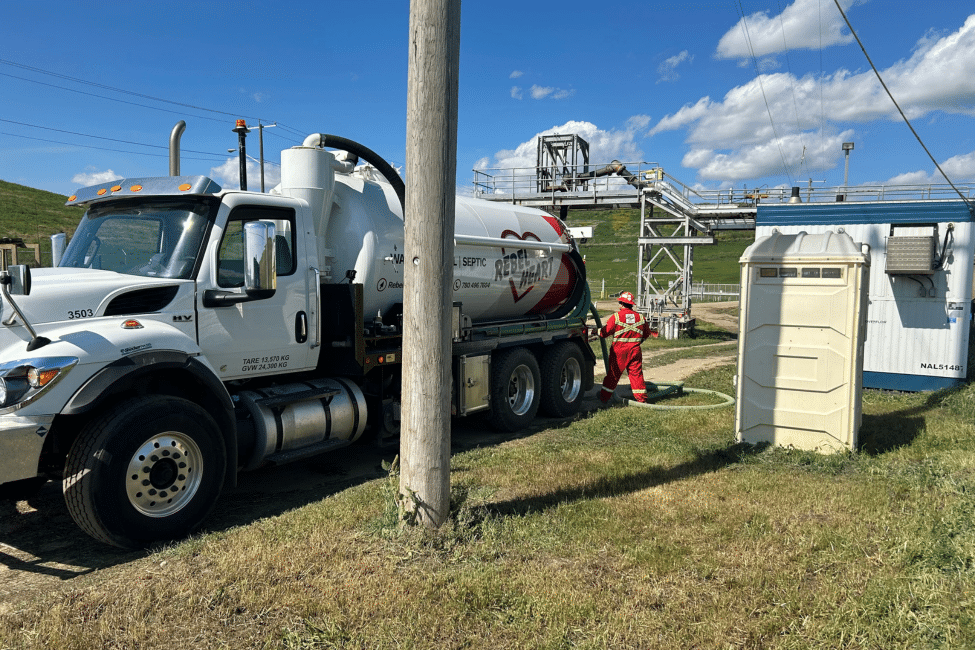
Can Commercial Septic Service Be Scheduled Before the Tank Is Full?
Yes. In fact, for many commercial sites, that’s the better way to handle it.
Rebel Heart can work with customers on scheduling based on tank capacity, normal site usage and how frequently service is typically required.
A project with a growing crew may need service more often than it did a few months earlier. A smaller facility may need far less frequent pumping.
The point isn’t to pump more often than necessary. It’s to avoid finding out the tank is full when the site needs it most.
Commercial customers that also require potable water can coordinate water and septic services through Rebel Heart, which can simplify site servicing and scheduling.
Frequently Asked Questions About Commercial Septic Waste Removal
Where does septic waste go after it is pumped?
Hauled wastewater is taken to an approved receiving location that accepts the type of material being transported. In Edmonton, EPCOR operates wastewater transfer stations that move accepted wastewater on to treatment facilities.
Can a septic truck remove industrial chemicals or contaminated liquid?
Not automatically. Hazardous waste and certain other materials are prohibited from Edmonton wastewater transfer stations. If you’re unsure what has entered the tank, tell Rebel Heart before pumping so the material can be assessed before standard septic service proceeds.
Does Rebel Heart offer recurring septic service for commercial sites?
Commercial site servicing can be planned using custom scheduling based on the needs of the property or project. This can help reduce the chance of a full tank becoming an urgent operational issue.
Can Rebel Heart provide emergency septic removal in Edmonton?
Yes. Rebel Heart provides 24/7 emergency response and offers urgent septic removal for situations including overflows, backups and system failures.
Keep Septic Service From Becoming a Site Emergency
Most commercial sites have enough moving parts already.
Septic doesn’t need to become another emergency.
Know roughly how quickly your tanks fill. Keep access clear for the truck. Let us know what is in the tank before we arrive, especially if anything outside normal wastewater may have entered the system. If the tank fills on a fairly predictable cycle, schedule the next removal before it reaches capacity.
If you need commercial septic waste removal in Edmonton, contact Rebel Heart to request service or talk with our team about a schedule that makes sense for your site.
We’re available 24 hours a day, seven days a week, when you need us.
